
Tooth pain is one of the most common health problems people try to ignore. Many assume it will go away on its own, but persistent dental pain is usually a sign of an underlying issue that needs attention. Ignoring early symptoms can lead to severe infection, tooth loss, and expensive treatments.
Understanding the warning signs of serious tooth pain can help you seek treatment early and protect your oral health.
Why Tooth Pain Happens
Tooth pain usually occurs when the inner layer of the tooth (pulp) becomes irritated or infected. Common causes include:
Tooth decay (cavities)
Gum infection
Cracked or broken teeth
Impacted wisdom teeth
Dental abscess
Pain is the body’s signal that something needs care
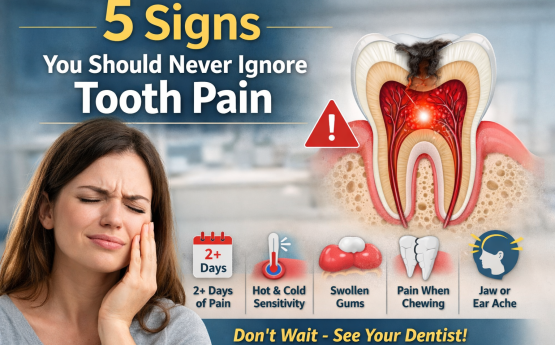
: it should never be ignored.
1. Tooth Pain That Lasts More Than Two Days
Mild sensitivity may come and go, but continuous tooth pain for more than 48 hours is a red flag.
This may indicate:
Deep cavity reaching the nerve
Infection inside the tooth
Pulp inflammation
At this stage, early treatment may save the tooth with a filling. Delaying care may lead to a root canal treatment or extraction.
2. Sensitivity to Hot and Cold That Lingers
Brief sensitivity is common, but pain that lingers after hot or cold food suggests deeper damage.
Possible causes:
Enamel erosion
Exposed dentin
Early nerve involvement
If temperature sensitivity lasts longer than 15–20 seconds, consult a dentist.
3. Swelling in Gums, Jaw, or Face
Swelling is a serious symptom of dental infection.
Watch for:
Swollen gums
Pus discharge
Facial swelling
Fever with tooth pain
These signs may indicate a dental abscess, which can spread if untreated. Immediate dental care is necessary.
4. Pain While Chewing or Biting
Pain on chewing often indicates structural damage.
It may be due to:
Cracked tooth
Loose crown or filling
Gum disease
Root infection
Every bite puts pressure on the damaged tooth, worsening the condition over time.
5. Tooth Pain With Headache or Ear Pain
Dental pain can radiate to nearby areas.
You may experience:
Headache
Earache
Jaw pain
Neck discomfort
This can be linked to impacted wisdom teeth, sinus pressure, or jaw joint (TMJ) disorders.
Risks of Ignoring Tooth Pain
Untreated dental pain can lead to:
Severe infection
Tooth loss
Spread of bacteria
Costly procedures
General health complications
Early dental treatment is always simpler and more affordable.
What To Do If You Have Tooth Pain
Temporary relief methods include:
Rinse with warm salt water
Avoid chewing on that side
Avoid extreme temperatures
Use prescribed pain relief
These measures reduce discomfort but do not treat the cause.
How to Prevent Tooth Pain
Brush twice daily with fluoride toothpaste
Floss regularly
Limit sugary foods
Schedule dental checkups every six months
Treat cavities early
Prevention saves time, money, and discomfort.
Frequently Asked Questions (FAQ)
Q1: Can tooth pain go away on its own?
Sometimes mild irritation reduces, but underlying decay or infection remains and can worsen.
Q2: When is tooth pain an emergency?
Swelling, fever, difficulty swallowing, or severe pain requires urgent dental care.
Q3: Can sinus problems cause tooth pain?
Yes, sinus pressure can cause pain in upper teeth.
Q4: Is it safe to take painkillers for toothache?
Painkillers help temporarily but do not cure the problem.
Final Words
Tooth pain is not something to “wait out.” Early diagnosis prevents major procedures and protects your smile. If you notice any of these warning signs, schedule a dental checkup promptly.